Fez, the Idrisid City Where You Learn to Slow Down: A Millennial Medina, Living Craftsmanship and Andalusian Flavors
September 1, 2026 at 8:04 PM · Compte supprimé
A spiritual capital shaped by twelve centuries of history
There are cities one visits, and cities one inhabits for the duration of a stay. Fès undoubtedly belongs to the latter category. Founded around 791 by the Idrisid sovereign Idriss I on the right bank of the river that bears its name, it truly became a capital under his son Idriss II, around 809, this time settled on the opposite bank, in what today forms the upper town. Very early on, two waves of migration came to forge its cosmopolitan identity: in 818, a revolt in Cordoba drove many Andalusians to seek refuge there; in 824, a rebellion in Kairouan in turn brought a significant Arab population. This original blending still explains today the Andalusian elegance of its architecture and the refinement of its craftsmanship.
Over nearly twelve centuries and under six successive dynasties, Fès forged a reputation that only Marrakech rivals in Morocco. It now carries a double title: spiritual and scholarly capital of the kingdom, and heritage of humanity, since it was, as early as 1981, the first Moroccan city inscribed by UNESCO. Under the French protectorate, a new Western-style town, Dar Debibag, developed alongside the historic medina, forming today's Ville Nouvelle. With Rabat becoming the administrative capital in 1912 and retaining that status after independence in 1956, Fès relinquished political power while preserving its intellectual and religious aura. At the prefecture level, the population reached 1,150,131 inhabitants in the 2014 census; at the broader level of the Fès-Meknès region, the population rose from 4,237,000 to 4,468,000 inhabitants between 2014 and 2024, a regional growth of 5.5%.
Districts that each tell a different era
Understanding Fès means first understanding its historical geography. Fès el-Bali, the oldest district, founded between 789 and 808, concentrates most of the city's listed heritage and is itself divided into two banks: that of the Kairouanais, the more frequented, and that of the Andalusians, more peaceful. In 1276, the Marinids founded an entirely new town to the west, Fès el-Jdid, primarily political and administrative in purpose, which housed the royal palace, the Dar al-Makhzen.
It is also in Fès el-Jdid that one finds the Mellah, the oldest Jewish quarter in Morocco, created in 1438 on the site of a former Syrian guards' camp. Its name is thought to derive from the Arabic word for salt. Finally, the Ville Nouvelle, inherited from the colonial era, today constitutes the modern, commercial hub of the city, best explored in contrast after immersing oneself in the medieval alleyways.
The must-sees of a UNESCO-listed medina
The medina of Fès el-Bali remains one of the best-preserved medieval urban complexes in the world. Here one finds the Al Quaraouiyine University-Mosque, whose construction is believed to have begun in 859 under the Idrisids: it is considered, according to both UNESCO and the Guinness Book of Records, to be the oldest university still in operation in the world.
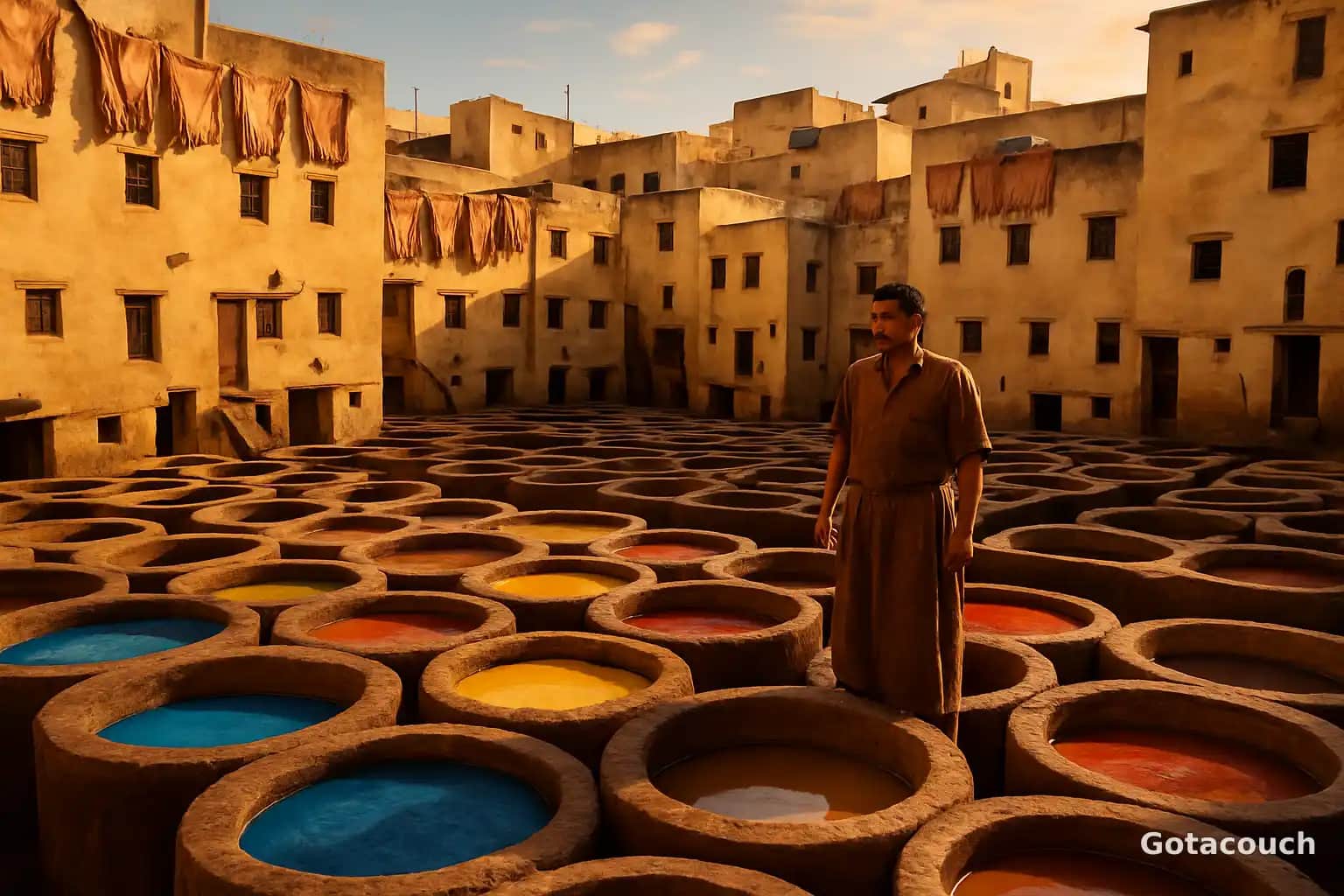
Not far away, the Bou Inania medersa, a masterpiece of Marinid architecture, stands out for a unique detail: it is the only medersa in Fès equipped with a minaret, since it also served as the neighborhood's Friday mosque. It is also one of the few religious monuments in Morocco open to non-Muslim visitors. It is also impossible to miss the Chouara tanneries, active for around 1,200 years, where leather comes to life in immense vats colored with natural pigments—indigo, saffron, cochineal, ochre. The Dar Batha Palace, built at the request of Sultan Hassan I to unite Fès el-Bali and Fès el-Jdid, now houses a museum of crafts, while the Jnan Sbil Gardens offer a welcome green interlude after the bustle of the souks—sources place their origin either in the Marinid era or in the 18th century under Moulay Abdallah, but they agree on their role as the city's oldest public park.
Getting lost, the only true way to visit Fès
If only one piece of advice were to be retained for discovering Fès properly, it would be this: deliberately get lost in the alleyways of the old town. This is precisely the spirit championed by GOT A COUCH?—setting aside the list of monuments to let oneself be carried away by the smells of spices, the sound of weaving looms, and invitations to share a tea.
Fès remains a city where traditional craftsmanship is more alive than ever: zellige, ceramics, leather, weaving, coppersmithing. Each workshop bears witness to know-how passed down from generation to generation, and stepping through an artisan's door often remains the best way to connect with a local far from tourist circuits. The famous blue pottery of Fès, adorned with patterns made from a mineral pigment extracted from cobalt, like zellige itself, draws directly on Andalusian heritage: artisans who fled Granada and Cordoba settled in Fès and founded this style, which has since become emblematic of Morocco as a whole.
A cultural scene open to the world
Every year, Fès affirms its calling as a spiritual capital through the Fès Festival of World Sacred Music, created in 1994, complemented since 2001 by the Fès Forum. These two events fall within the city's scholarly, artistic and spiritual tradition. In 2026, the city will thus host, from June 4 to 7, the 29th edition of the festival, with a program devoted to spiritual rituals and musical traditions of several civilizations—a unique opportunity to experience Fès in a different light, between nighttime concerts in the riads and intercultural encounters.
Pastilla, khliî and harira: the Fassi table
The gastronomy of Fès is renowned throughout the kingdom, and pastilla is its absolute symbol: this pastry made with pigeon, onion, parsley, coriander, hard-boiled egg and almonds, flavored with cinnamon, perfectly embodies the sweet-and-savory pairing typical of Fassi cuisine. Khliî, dried and spiced meat, is also a specialty originating from the city, while harira, a traditional soup, is not confined to the month of Ramadan: it is also enjoyed in the morning at the souk or as a starter during major festive meals. Strolling through the medina's food souks, among olive stalls, mounds of spices and pastry shops, remains one of the most sensory experiences the city has to offer.
Off the beaten track
Far from the queues at the best-known monuments, the Mellah district offers a more peaceful atmosphere and a deep dive into Morocco's Jewish history. The Nejjarine Museum, devoted to woodworking craftsmanship, is often overlooked by hurried visitors, even though it makes an excellent introduction to Fassi artisan trades. Finally, the Marinid tombs, overlooking the city, offer a panorama over the medina and the tanneries, far from the crowds—an ideal spot to watch the sunset over the ochre rooftops of Fès.
Around Fès: the Middle Atlas and the imperial cities
Fès's location makes it an excellent starting point for exploring northern Morocco. Meknès, a neighboring imperial city also listed by UNESCO, became the capital under the reign of Moulay Ismaïl, between 1672 and 1727; it is notable for its monumental ramparts reaching 15 meters in height. The Roman ruins of Volubilis naturally complement this excursion. Further south, the mountain resort town of Ifrane, with its unusual architecture, attracts an affluent Moroccan clientele and is home to one of the country's most prestigious universities, while the cedar forest of Azrou, along the way, is famous for its Gouraud cedar, the largest and oldest in the region, and is home to colonies of Barbary macaques. The villages of Sefrou and Bhalil pleasantly round out itineraries starting from Fès.
When to go and how long to stay
Spring, from April to May, and autumn, from September to October, remain the most recommended periods, offering mild weather for exploring the medina on foot. Summer can prove particularly intense in Fès, due to the absence of the oceanic influence that tempers other Moroccan cities such as Rabat or Casablanca. As for length of stay, most guides converge on a minimum of three full days to enjoy both the major historical sites and the quieter corners of the medina; to combine Fès with excursions to Meknès, Volubilis and the Middle Atlas, it is better to plan for five to seven days.
Practical tips for traveling with peace of mind
- Fès is generally a safe city, comparable to a Western city of similar size, but it is not advisable to wander alone at night in the medina, especially for women travelers.
- The city has long been known for its fake guides, who gather mainly around Bab Bou Djeloud, the main entrance gate to the medina: downloading an offline map of the medina significantly reduces solicitations, since a visitor who appears to know where they are going is approached far less often.
- It is strongly recommended to ask your host to come and meet newcomers at a gate of the medina, Bab Boujloud or Bab Rcif, since finding one's own way there with luggage can sometimes be quite a feat.
- For Fès's small red taxis, always negotiate the fare before getting in, or insist on the use of the meter.
- Staying at the heart of Fès el-Bali, in a riad or with a local host, remains the best way to experience total immersion in this medieval labyrinth where time seems to have stood still—the very spirit of the GOT A COUCH? experience.
A destination in full tourism momentum
Morocco crossed the threshold of 17.4 million tourists in 2024, a 20% increase compared to 2023, thus reaching ahead of schedule a target initially set for 2026. Foreign tourists, up 41% in 2023 compared to the previous year, accounted at that time for 49% of overall arrivals in the kingdom. At the level of the Fès-Meknès region, classified tourist accommodation establishments recorded more than 3.1 million overnight stays in 2025, up 9% compared to the 2.8 million recorded in 2024. The city of Fès itself stands out as the driving force behind this regional momentum, with 1.67 million tourist overnight stays in 2025, representing more than half of the overnight stays recorded across the entire region—a performance bolstered by a new repositioning strategy called "Shining Fès." These figures confirm what travelers discover on the ground: Fès is not a secondary stop in Morocco, but a destination in its own right, one that deserves to be given time.
Articles to discover
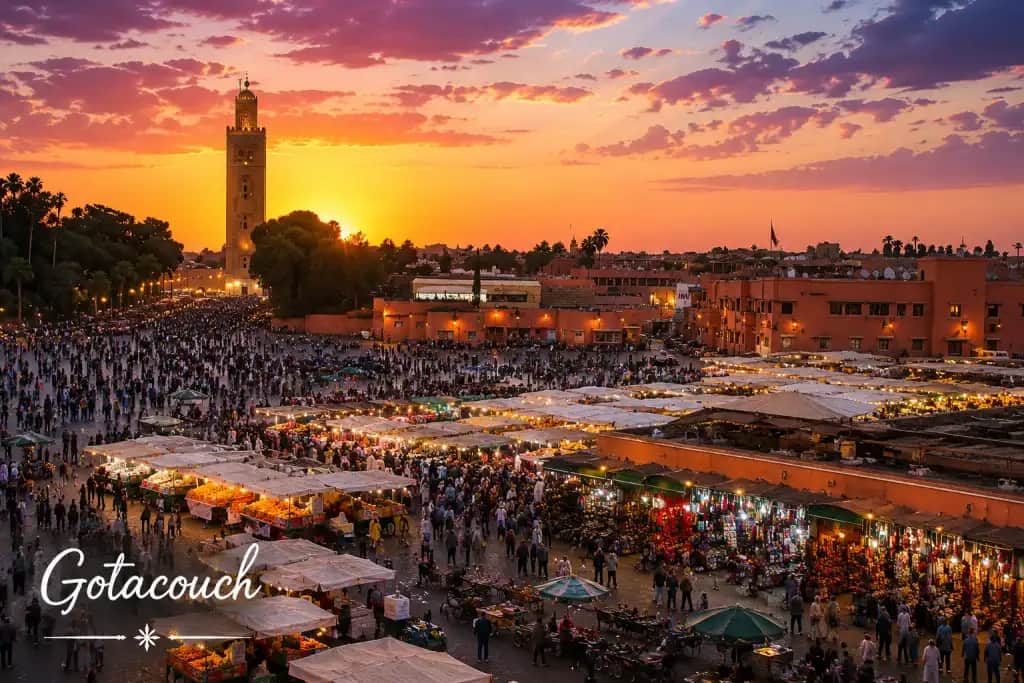
Marrakech: the red city that must be experienced as much as visited
August 13, 2026 at 8:12 PM
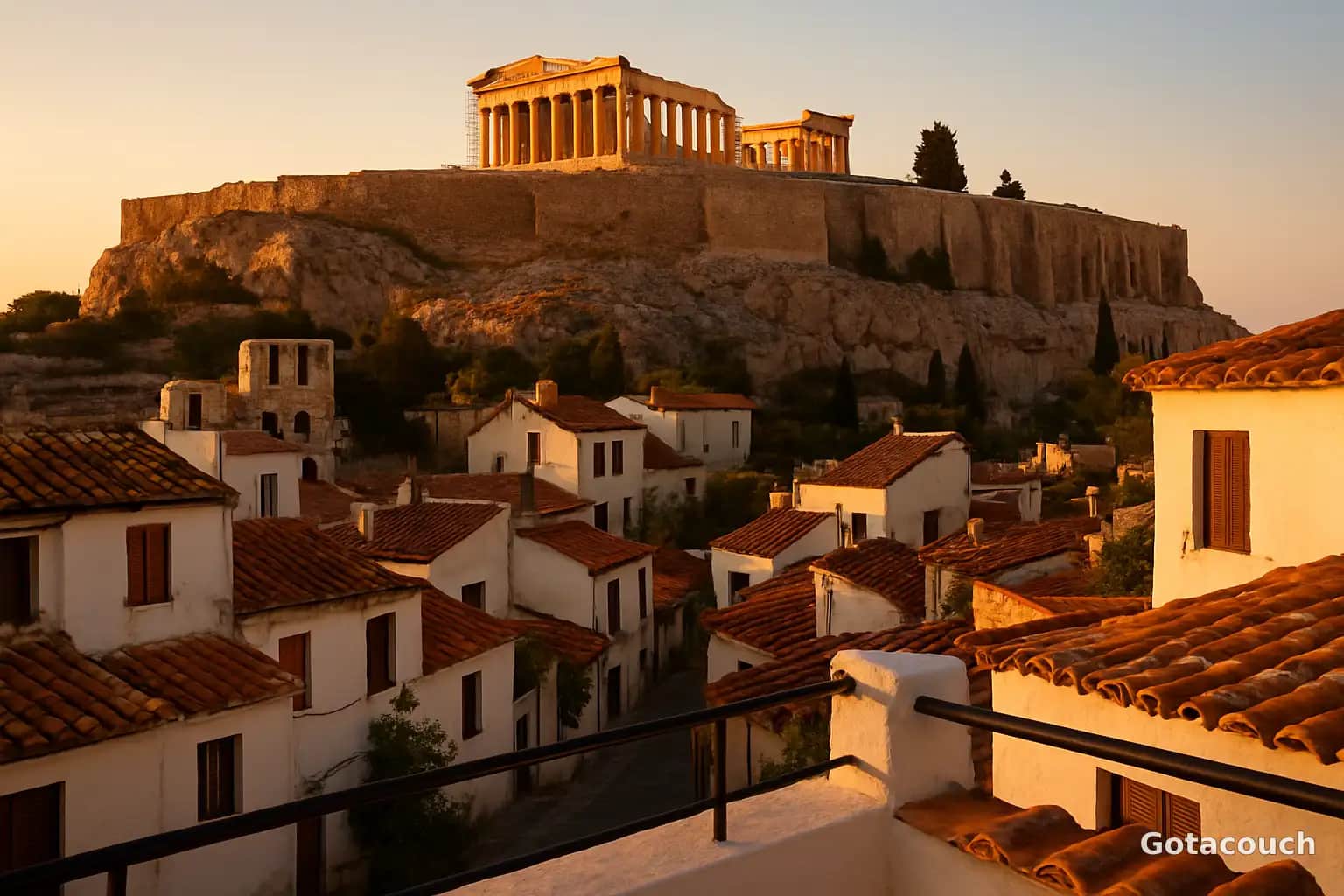
Athens Neighborhood by Neighborhood: Marble Ruins, Cycladic Alleys and Rooftop Ouzo Beneath the Acropolis
September 21, 2026 at 12:20 PM
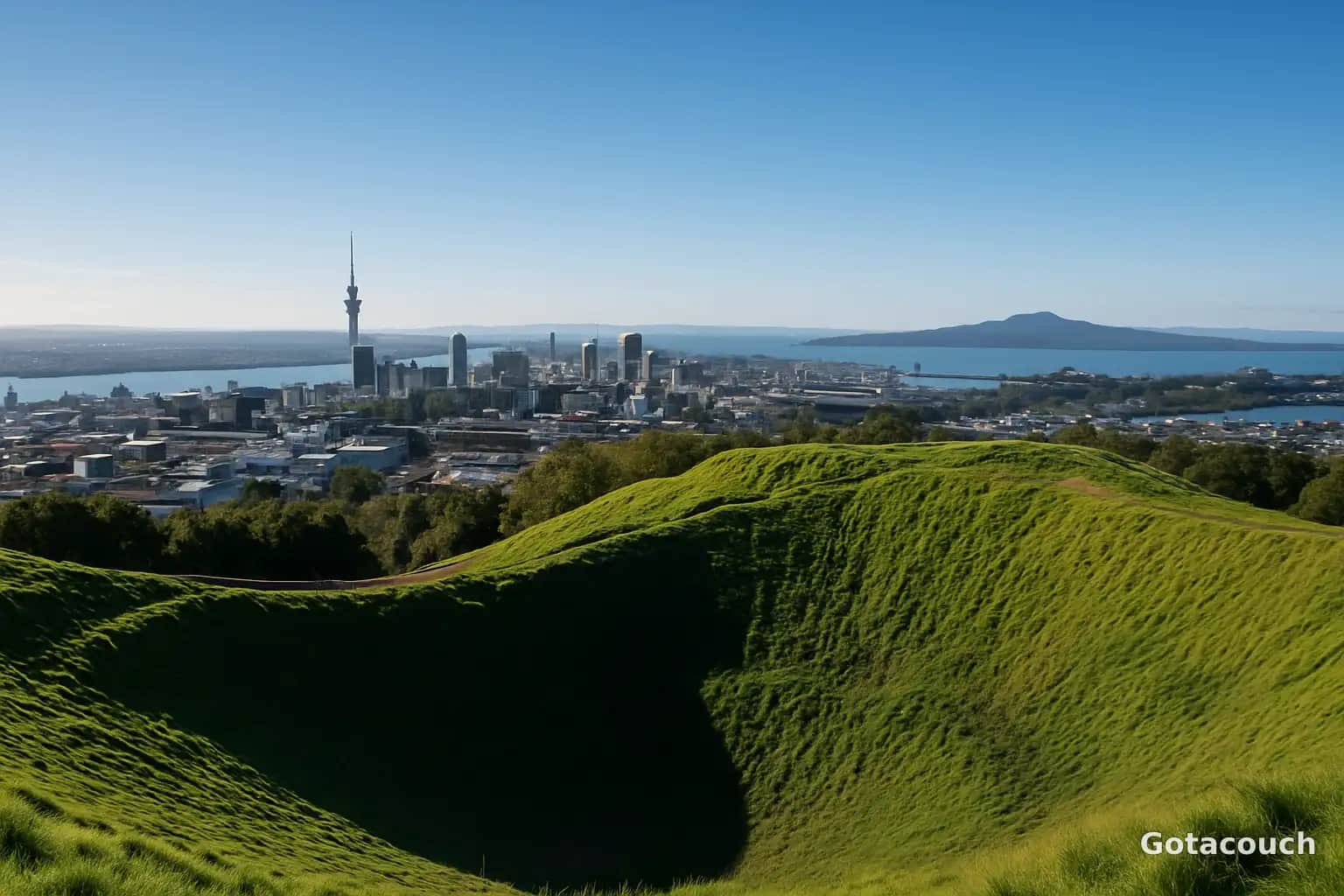
Auckland, City of Volcanoes and Sails: Where Māori Heritage Meets the Pacific Soul of New Zealand
September 19, 2026 at 8:06 PM
Amsterdam Beyond the Canals: Cycling Through Neighborhoods, Markets and the Dutch Art of Everyday Life
September 19, 2026 at 8:55 AM
Accra, the Ghanaian capital that carried Africa's independence: Jamestown, Osu and the Ga soul
September 5, 2026 at 12:58 AM
Seoul, a City of Two Faces: Royal Palaces, Futuristic Neon and Hallyu Culture Along the Han
September 2, 2026 at 8:05 AM
Comments
Log in to leave a comment.
No comments yet.