Copenhagen on Two Wheels: Canals, Hygge and the New Nordic Spirit of Denmark's Capital
October 15, 2026 at 11:18 AM · GotaNomad
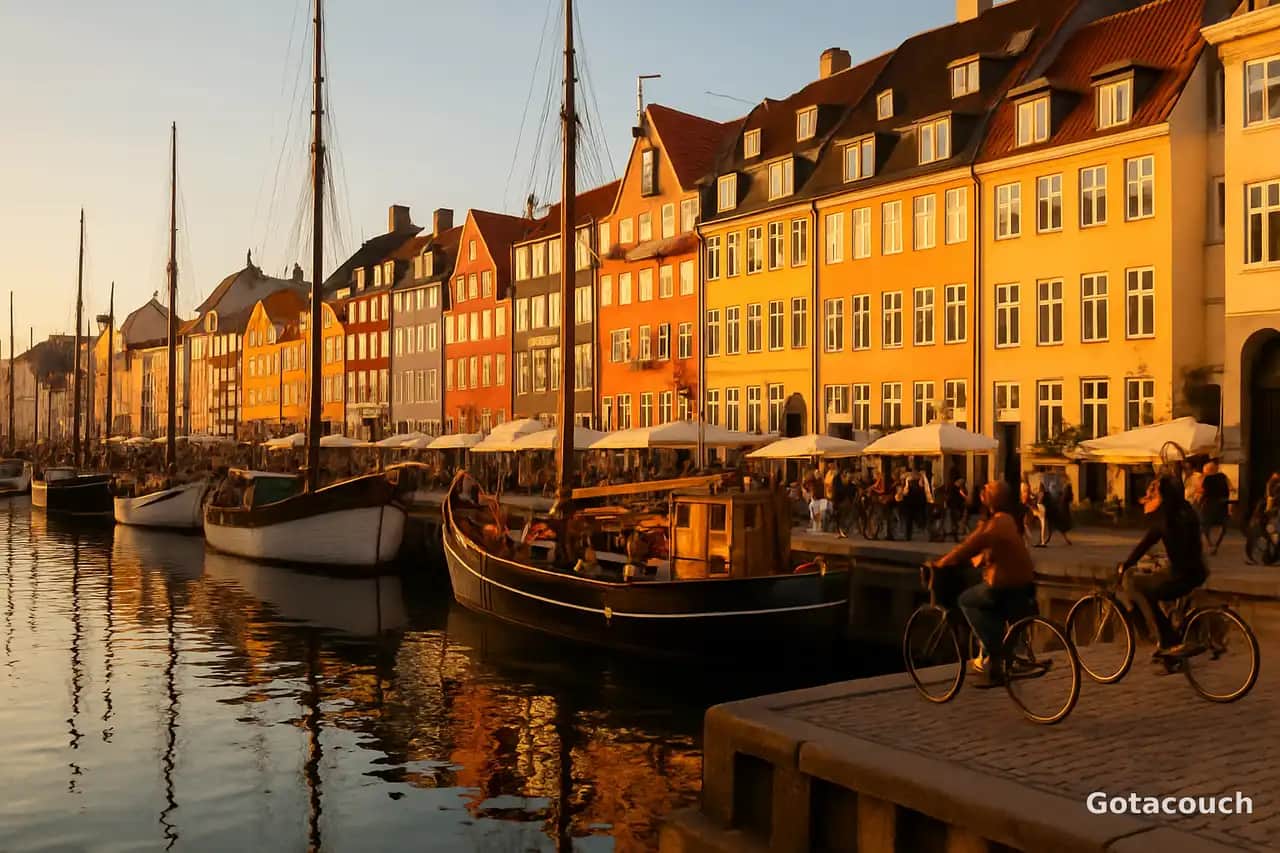
There is a particular rhythm to Copenhagen: the soft whirr of bicycle wheels on cobblestones, the clink of glasses in a canal-side café, the quiet hum of a city that has built its entire identity around comfort, community and craftsmanship. Danes call this feeling hygge — a word that resists direct translation but means something close to the warmth of shared moments, a candlelit table, a good conversation. To visit Copenhagen is to slip into that rhythm, one bike lane and one smørrebrød at a time.
Founded around 1167 when Bishop Absalon built a fortress on what is now the site of Christiansborg Castle, Copenhagen's name literally means "merchants' harbor" in Old Danish — a fitting origin for a city that grew wealthy from trade and the sea. By the 15th century it had become the capital of the Kingdom of Denmark, a status it has held ever since, evolving from a fortified trading post into one of Europe's most livable, design-conscious capitals.
A City Built on Water and Power
Copenhagen's historic core still traces the outline of its royal and maritime past. Christiansborg Castle stands on the very ground where Absalon's fortress once rose, now housing the Danish Parliament, the Supreme Court and government offices — a rare case of a single site remaining the seat of power for nearly nine centuries. A short walk away, Rosenborg Castle offers a gentler, more intimate glimpse into royal life: built in the early 1600s as a Renaissance residence for King Christian IV, it now safeguards the Danish crown jewels among its turrets and gardens.
No image of Copenhagen is more familiar than Nyhavn, the 17th-century canal lined with brightly painted townhouses that once served sailors and merchants and today serves aperitifs and ice cream to visitors leaning over the water. Nearby, the four rococo pavilions of Amalienborg Palace have housed the Danish royal family since the late 18th century, arranged around an octagonal courtyard where the changing of the guard still draws a curious crowd. And just along the harbor, the small bronze figure of the Little Mermaid — unveiled in 1913 and inspired by Hans Christian Andersen's tale — remains a quiet, almost modest monument, often more striking for its setting than its size.
Neighborhoods With Their Own Personalities
Beyond the postcard center, Copenhagen reveals itself most honestly in its neighborhoods, each with a distinct character shaped by its history.
Nørrebro: Multicultural and Unfiltered
Nørrebro is where Copenhagen's creative, multicultural energy lives. Independent cafés, vintage shops and a genuinely local atmosphere make it a favorite for those who want to see the city away from its most touristed streets — a neighborhood that feels lived-in rather than curated.
Vesterbro: From Red-Light District to Design Hub
Just behind the central station, Vesterbro tells a story of transformation. Once a working-class area known for its red-light district, it has been thoroughly gentrified and is now home to the Meatpacking District (Kødbyen), a cluster of bars and small restaurants where locals gather long after the meat trucks have gone.
Christianshavn and the Free Town of Christiania
Crossed by canals and dotted with houseboats, Christianshavn has a village-like calm, but it is best known for Christiania, the self-governing community founded within the neighborhood. Visiting Christiania is a genuinely atypical experience, and one to approach with respect: the community has its own strict rules, and photography is forbidden in certain areas. It rewards curious, considerate travelers rather than casual sightseers.
Refshaleøen and Islands Brygge: The New Waterfront
On the former industrial wasteland of Refshaleøen, old shipyards have been reborn as a cultural and street-food zone, anchored by Reffen, an open-air market where food stalls change seasonally — it's worth checking opening schedules before visiting. Across the harbor, Islands Brygge is a residential neighborhood beloved for its urban harbor baths, where Copenhageners swim in clean city water during the summer months, a small but telling sign of how closely this city lives with its waterways.
The Taste of Copenhagen: From Smørrebrød to New Nordic
Danish food culture is anchored by smørrebrød, the iconic open-faced sandwich built on a dense slice of rye bread (rugbrød) and topped with pickled herring, fish, cold meats or cheese, traditionally paired with a shot of akvavit. It's humble, precise and deeply satisfying — a dish best discovered at a market stall or a no-frills lunch spot rather than a formal restaurant.
But Copenhagen's culinary reputation today rests largely on the New Nordic Cuisine movement, formalized in a 2004 manifesto signed by several Scandinavian chefs, including René Redzepi of Noma. The movement champions local, seasonal and foraged ingredients, and it fundamentally reshaped how the world sees Danish food — the city now counts several Michelin-starred restaurants, their number shifting slightly each year as the scene continues to evolve.
For a more everyday taste of this food culture, head to Torvehallerne, the glass-walled covered market near Nørreport station. It's a genuine meeting point for locals, with stalls selling fresh produce, charcuterie, fish, cheese and street food — ideal for assembling a lunch the Danish way, standing at a counter with a coffee in hand.
Hygge isn't a tourist attraction — it's a way of sharing a table, a blanket or a conversation that you'll feel rather than see, in a café booth or on a bike ride home at dusk.
Day Trips: Castles, Vikings and a Crossing to Sweden
Copenhagen's surroundings reward those willing to venture a little further. The Louisiana Museum of Modern Art in Humlebæk, reachable by regional train, is as much about its architecture — seamlessly integrated into the surrounding landscape — as its collection. It pairs naturally with Kronborg Castle in Helsingør, the UNESCO-listed fortress forever linked to Shakespeare's Hamlet, from where a short ferry crossing reaches Helsingborg in Sweden.
Further south, Roskilde offers its UNESCO-listed cathedral, the burial site of Danish monarchs, alongside the Viking Ship Museum. For a shorter escape, the fishing village of Dragør, with its yellow thatched-roof houses, makes for a peaceful half-day trip. And across the Øresund Bridge, Malmö in Sweden is an easy cross-border excursion for travelers wanting a taste of Scandinavia beyond Denmark. Allow a full day for Louisiana and Kronborg combined, or for Roskilde alone, and always check current schedules and fares before setting off.
When to Visit
Denmark's temperate oceanic climate means mild summers (June to August) with long daylight hours — the most popular season for outdoor sightseeing and coastal excursions — while winters are cold, damp and marked by very short days. Travelers seeking a quieter visit with pleasant weather often choose May or early September, when the city is just as walkable and bikeable but noticeably less crowded.
Practical Tips for a Smooth Stay
- Denmark is part of the Schengen Area, so EU/Swiss citizens need only a valid ID card or passport — no visa required.
- Denmark uses the Danish krone (DKK), not the euro, despite being an EU member; carry some local currency or confirm your card works abroad without excessive fees.
- Copenhagen's cycling infrastructure is extensive and deeply woven into daily life — renting a bike is often the most authentic way to explore, alongside the city's metro and S-tog suburban trains.
- Check current transport fares and passes (Rejsekort, apps, tourist cards) with DOT or the local tourism office before you travel.
- Copenhagen enjoys a strong reputation as a safe city internationally, though it's always wise to check official travel advisories for up-to-date guidance.
- The Nordic countries, including Denmark, are known for a high cost of living — budget accordingly, even without a precise figure to rely on.
- If local volunteer-led "Greeter" tours interest you, check current availability directly with the organizing association, as these programs exist across Scandinavia but vary by city and season.
A City That Lives at Human Scale
What stays with visitors long after leaving Copenhagen isn't just the colorful facades of Nyhavn or the spires of its churches — it's the sense of a city designed around people rather than monuments. Between a bike ride through Nørrebro, a plate of smørrebrød at a market counter, and an evening swim at Islands Brygge, Copenhagen offers something increasingly rare: a capital where history, design and everyday life share the same gentle, unhurried pace.
Articles to discover

Chiang Mai Within Its Moats: Lanna Heritage, Misty Mountains and the Slow Rhythm of Northern Thailand
October 14, 2026 at 3:17 PM
Cartagena de Indias: Walls Built Against Pirates, a Heart Beating to Afro-Caribbean Rhythm
October 14, 2026 at 3:07 PM
Cape Town Between Two Oceans: Layers of History, Colour and Cuisine Beneath Table Mountain
October 14, 2026 at 2:57 PM
Buenos Aires Block by Block: Tango Roots, Immigrant Dreams and the Rituals of Porteño Life
October 14, 2026 at 2:48 PM
Budapest, City of Two Souls: How Buda and Pest Became One Danube Capital
October 14, 2026 at 2:32 PM
Bogotá at 2,600 Meters: Colonial Alleys, Golden Legends and the High-Altitude Soul of Colombia's Capital
October 14, 2026 at 2:28 PM
Comments
Log in to leave a comment.
No comments yet.