Accra, the Ghanaian capital that carried Africa's independence: Jamestown, Osu and the Ga soul
September 5, 2026 at 12:58 AM · Compte supprimé
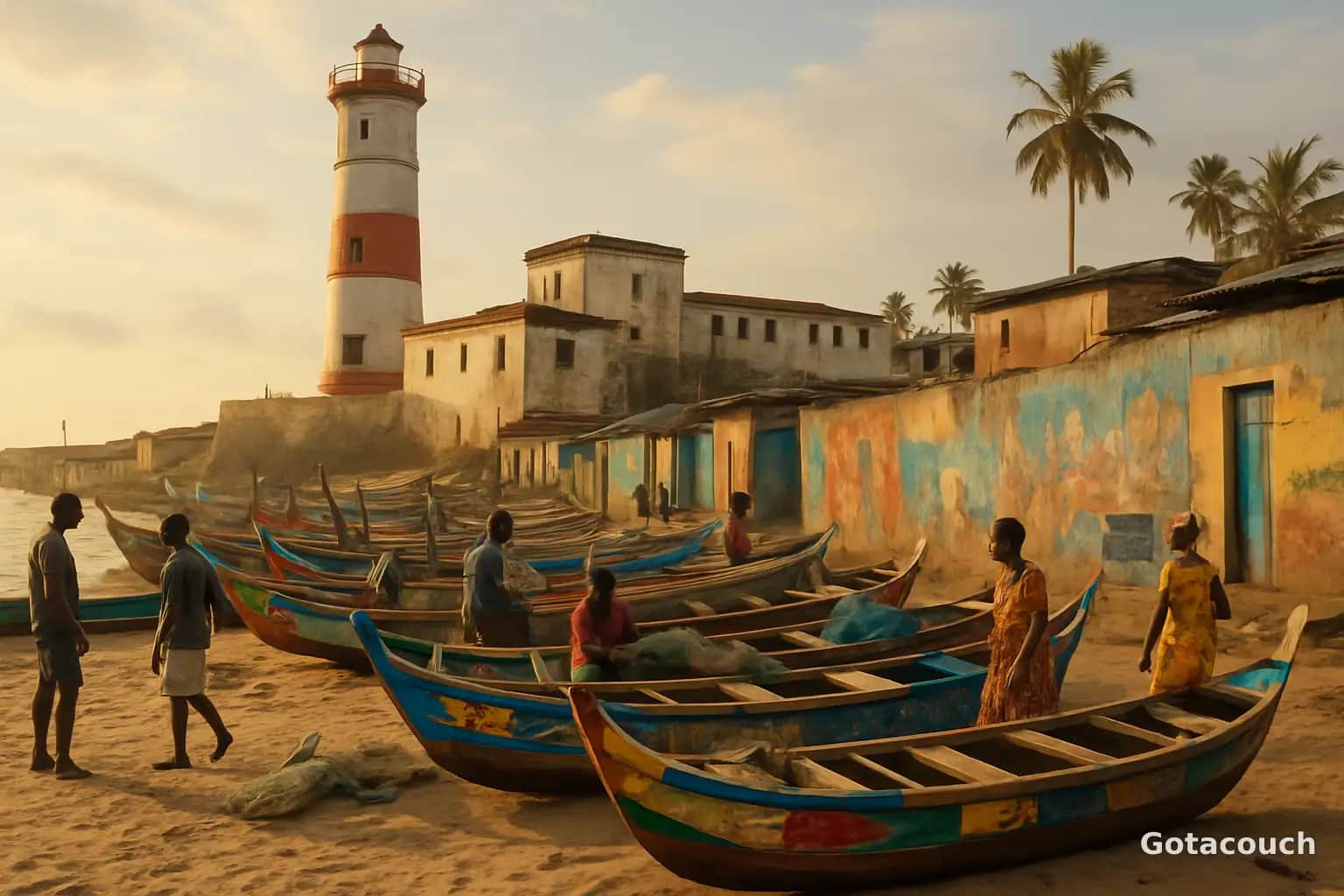
On the Gulf of Guinea, Accra cannot be visited like a capital frozen in its monuments: it is lived through the rhythm of its markets, its fishing neighborhoods and its wall murals. Capital of Ghana, the first country in sub-Saharan Africa to proclaim its independence from a colonial power, the city still bears the traces of its past as a trading post while asserting a contemporary identity resolutely turned toward urban art and Ga culture, the historic people of the region. Traveling to Accra means accepting to slow down, to get lost in the alleys of Jamestown and to let the locals tell the story of their city better than any guidebook could.
A capital born of trade and colonial memory
From the 17th century onward, several European powers set up trading posts along the coast: the Dutch, British and Danish built forts there that would become the foundation of the future urban center. It was in 1877 that Accra officially became the capital of the British colony of the Gold Coast, replacing Cape Coast. But the date that resonates most strongly in Ghanaian memory remains March 6, 1957: on that day, in Accra, the country proclaimed its independence, paving the way for the decolonization of sub-Saharan Africa. This history can still be read today at Independence Square, also known as Black Star Square, where the Independence Arch and the Unknown Soldier Monument stand, as well as at the Kwame Nkrumah Memorial Park and Mausoleum, erected on the very site of the first Ghanaian president's speech.
Jamestown, the heritage heart of the city
It is impossible to talk about Accra without lingering in Jamestown, the oldest heritage neighborhood of the capital. Around the old British Fort James and its emblematic lighthouse, the alleys of this fishing neighborhood tell a story that is both popular and artistic: colorful wall murals, canoes pulled up on the sand, artists' workshops standing alongside the homes of Ga families settled here for generations. Not far away, Fort Ussher, a former Dutch trading post, has at various times been converted into a cultural and museum space. Guided walking tours, often led by young residents of the neighborhood, allow visitors to meet fishermen and artists while understanding the challenges of preserving this living heritage. Every year in August, the Chale Wote festival transforms the walls of Jamestown into an open-air urban art gallery, blending painting, performance and music.
Osu and Makola, two faces of daily life
In contrast to Jamestown's heritage atmosphere, the Osu neighborhood embodies Accra's contemporary energy. Its main street, locally nicknamed "Oxford Street," is packed with restaurants, bars and shops where traditional Ghanaian cuisine and international influences echo each other well into the night. For a more popular immersion, head to Accra Central and its Makola Market, one of the largest and oldest markets in the country: food stalls, colorful wax fabrics and crafts sit side by side in a typically West African effervescence. It is advisable to stay attentive to your belongings amid the market crowds, as in any large urban shopping area. Not far from the port, the Centre for National Culture brings together wood carvings, drums and kente, the traditional fabric emblematic of Ghana, offering an ideal opportunity to bring back an authentic souvenir while supporting local craftsmanship.
The cultural pulse of the Ga city
Beyond the places themselves, it is Ga culture that gives Accra its deep rhythm. The Homowo festival, whose name literally means "to hoot at hunger," is its most striking expression: after a period of noise prohibition, the festivities burst forth with the sharing of kpokpoi, a fermented corn dish served with palm nut soup, offered to the ancestors as a sign of gratitude and collective memory. Witnessing these celebrations, even from a distance, reveals just how much spirituality and community remain at the heart of life in Accra, well beyond the usual tourist circuits.
Street food and local eateries
Ghanaian cuisine can be savored in Accra in all its diversity: fragrant jollof rice, banku and fufu served with spicy sauces, fermented kenkey, or red red, that delicious mix of beans and fried plantains. The street stalls of Jamestown or Osu often offer the most authentic experience, while Osu's restaurants let you enjoy these classics in a more polished setting. Sharing a meal with a local, in keeping with the GOT A COUCH? spirit, is undoubtedly the best way to understand why food holds such a central place in Ghanaian culture.
Excursions around Accra
The Ghanaian capital is also an excellent starting point for exploring the surrounding area. About 30 minutes to the west, the fishing village of Kokrobite and its beach offer a more peaceful escape than the popular Labadi Beach, which draws large crowds on weekends for its live music and festive atmosphere. An hour's drive to the north, in the hills of Akwapim, the Aburi botanical garden invites visitors on a refreshing stroll away from the urban bustle. For travelers with more time, an excursion to Cape Coast and Elmina, about two and a half to three hours by road, allows a visit to the historic forts and castles linked to the transatlantic slave trade, often combined with a stop at Kakum National Park and its famous canopy walk. Farther afield, the Volta region and its Wli waterfalls round out an itinerary for those curious about nature.
When to go
Accra's climate is divided into two main rainy seasons, from April to June and then from September to October. The harmattan period, between December and February, is generally considered the most comfortable time to travel: the sky becomes veiled in a haze of Saharan dust, but rainfall becomes rarer, making city strolls and excursions more pleasant.
Practical tips for getting around and traveling smoothly
Accra has neither a subway nor a bus network structured on a Western scale: getting around is done mainly by taxi, through ride-hailing apps like Uber or Bolt, which are widely used and convenient for visitors, or by trotro, those typical shared minibuses that are less easy to navigate without local experience. It is advisable to check app fares before getting in, as prices and availability can vary. On the formalities side, Ghana has updated its entry rules in recent years, with an electronic authorization system for certain visitors: it is best to check the current conditions directly on the official Ghanaian government website or with the embassy before departure. Finally, as with any destination, it is recommended to consult your country's official travel advisories in order to travel with full knowledge of the facts.
Accra cannot be summed up in a list of monuments: it reveals itself in the murals of Jamestown, the hubbub of Makola, the music of Osu and the memory of a country that paved the way for African independence. A capital on a human scale, where every neighborhood tells a different facet of contemporary Ghana.
Articles to discover
Athens Neighborhood by Neighborhood: Marble Ruins, Cycladic Alleys and Rooftop Ouzo Beneath the Acropolis
September 21, 2026 at 12:20 PM
Auckland, City of Volcanoes and Sails: Where Māori Heritage Meets the Pacific Soul of New Zealand
September 19, 2026 at 8:06 PM
Amsterdam Beyond the Canals: Cycling Through Neighborhoods, Markets and the Dutch Art of Everyday Life
September 19, 2026 at 8:55 AM
Seoul, a City of Two Faces: Royal Palaces, Futuristic Neon and Hallyu Culture Along the Han
September 2, 2026 at 8:05 AM
Fez, the Idrisid City Where You Learn to Slow Down: A Millennial Medina, Living Craftsmanship and Andalusian Flavors
September 1, 2026 at 8:04 PM
Madrid, a Capital of Two Speeds: Between Art, Bustling Markets, and Spanish Popular Traditions
September 1, 2026 at 8:04 AM
Comments (2)
Log in to leave a comment.

Layadi FDSep 6, 2026
@Fahd Boujadi @Ismail Taouragt comment vous trouvez mes articles?

Fahd BoujadiSep 10, 2026
Oui j ai deja vu