Madrid, a Capital of Two Speeds: Between Art, Bustling Markets, and Spanish Popular Traditions
September 1, 2026 at 8:04 AM · Compte supprimé
Madrid cannot be summed up by its museums alone, even though they rank among the greatest in the world. The Spanish capital is best savored in its neighborhoods, at its markets, and in the distinctive rhythm of its days that stretch on well after nightfall. This is a city that has inherited a turbulent history, an identity as a royal court, and a popular soul that has never faded—and it continues, year after year, to attract ever more travelers in search of its singular energy.
A Capital Born from a Muslim Fortress
Madrid's history begins well before it became a capital. According to the official website of the city hall, it was Emir Mohammed I, who reigned between 852 and 886, who ordered the construction of a fortress on the bank of the Manzanares river, known in Arabic texts as Mayrit—the very origin of the city's name. This fortress, built on the site where the Royal Palace now stands, was used to monitor movements coming from the Sierra de Guadarrama.
The city fell under Christian rule in 1083, when Alfonso VI captured Toledo, before being partially destroyed by the Almoravids in 1109. But the real turning point came in 1561, when King Felipe II made Madrid the permanent seat of his court. This decision radically transformed the city: its medieval past was gradually erased to make way for a capital worthy of an empire then in full expansion. This duality between la Corte, the seat of royal power, and la Villa, with its own administration, still shapes Madrid's identity today.
Neighborhoods with Distinct Personalities
It is perhaps in its neighborhoods that Madrid best reveals its many faces. Malasaña, bordered by Gran Vía to the south, Calle Fuencarral to the east, Calle Carranza to the north, and Calle de San Bernardo to the west, cultivates a bohemian, hipster atmosphere—a true mecca of vintage style and Madrid's underground culture. This neighborhood was the scene of the uprising against Napoleonic troops before becoming, in the 1980s, the cradle of the Movida, the cultural movement that marked the post-Franco era.
Southeast of the historic center, Lavapiés and La Latina unfold in steep, narrow, labyrinthine streets, a legacy of a district born outside the city walls shortly after Madrid became the capital in 1561. Lavapiés today is a true melting pot of cultures that has never lost its working-class essence. Further north, Chamberí offers a calmer, more residential face, with an aristocratic architectural heritage: it is home to Andén Cero, a former metro station closed in 1969 and now transformed into an interpretation center that takes visitors back to the Madrid of 1919. Not to be forgotten are Chueca, the historic heart of Madrid's LGBT+ life, and Salamanca, an upscale neighborhood with elegant boutiques near Retiro Park.
The Art Triangle and the Essential Sights
It is impossible to talk about Madrid without mentioning the Prado Museum, founded in 1819 and now one of the greatest art museums in the world: in 2023, it welcomed 3,337,550 visitors, ranking 13th worldwide among the most visited museum institutions. Together with the Reina Sofía—home to Picasso's famous Guernica—and the Thyssen-Bornemisza, it forms Madrid's celebrated art triangle.
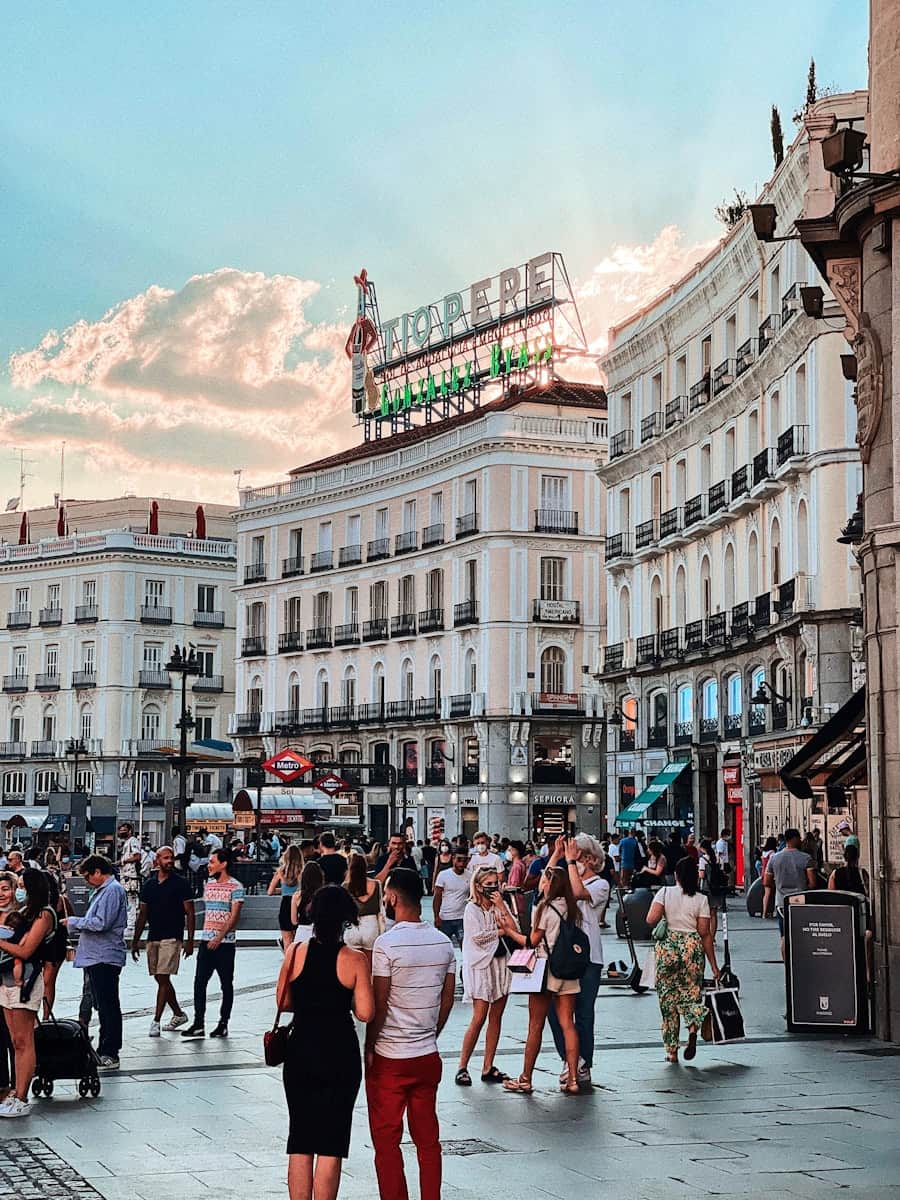
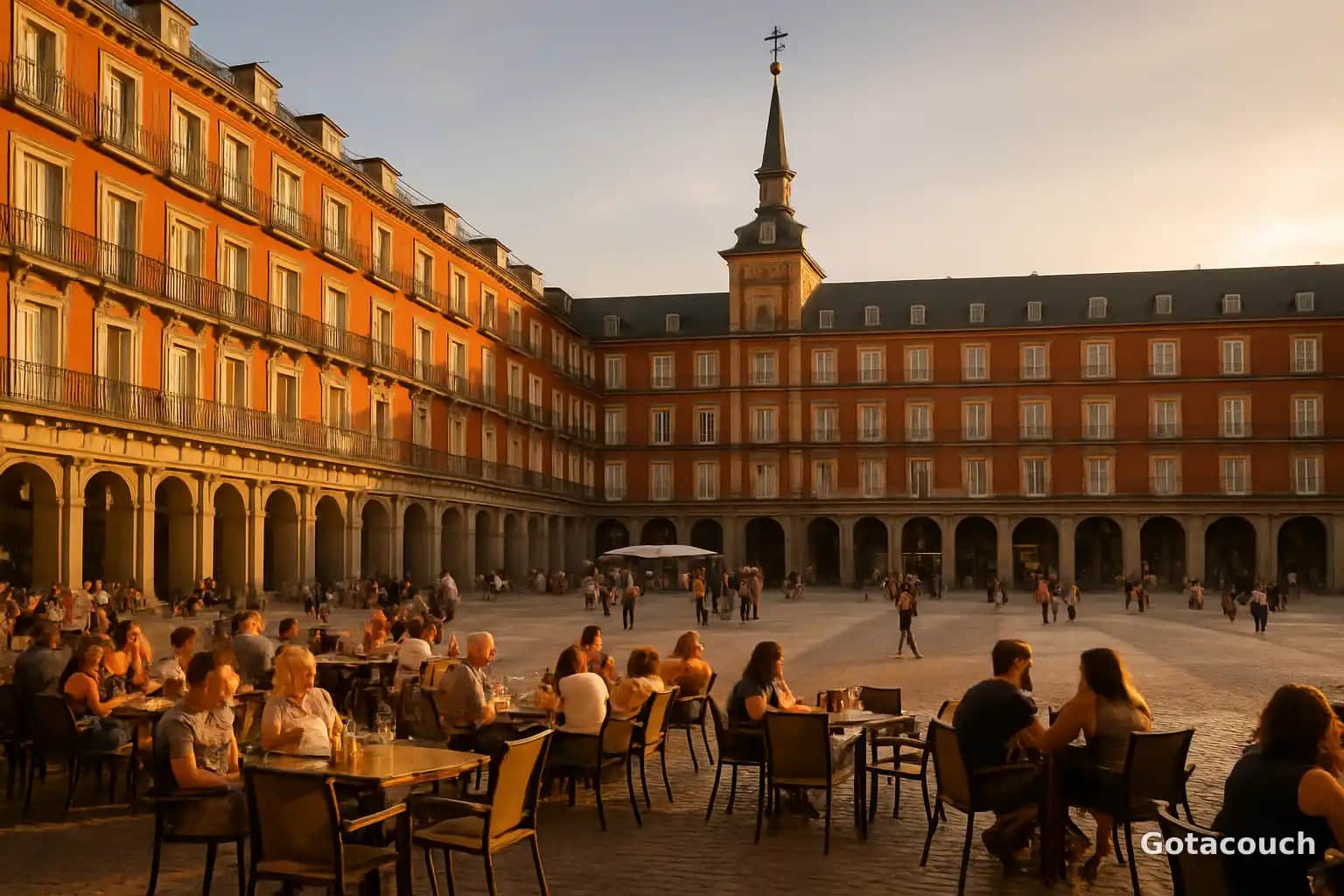
Not far from there, the Paseo del Prado and Parque del Buen Retiro were added in 2021 to the UNESCO World Heritage List, during the 44th Committee session held online from Fuzhou, China. This recognition makes Madrid the first historic urban landscape declared as such in Europe, and only the second in the world after Rio de Janeiro. Add to this the Royal Palace, built on the very site of the ancient founding fortress, as well as the Plaza Mayor, the Puerta del Sol, and the constant buzz of Gran Vía, and you have a historic center of remarkable heritage density.
Living Madrid Like a Local
To truly feel the pulse of the city, nothing beats a Sunday at El Rastro, this flea market that has existed since the 16th century and was officially established in 1740. Set up mainly along Calle Ribera de los Curtidores, it brings together more than 3,500 themed stalls and remains, above all, an occasion to meet friends and soak up the Spanish atmosphere, far more than a simple shopping outing.
The Mercado de La Cebada, in the La Latina neighborhood, offers an equally authentic experience: a true feast for the senses, where locals do their daily shopping and visitors discover Spanish cuisine away from the more touristy circuits. And for a more literary break, Café Comercial has, for more than 120 years, kept alive the journalistic and literary gatherings that shaped Madrid's intellectual life, having once welcomed figures such as Camilo José Cela and Antonio Machado.
San Isidro, the Popular Soul of Madrid
Each year, around May 15th, the city celebrates its patron saint during the festivities of San Isidro. Born in 1082 and died around 1172, San Isidro had his canonization requested in 1562 by three residents of the recently proclaimed capital, before finally being canonized in 1622 under Pope Gregory XV. During this week of festivities, Madrileños dress up as chulapos and chulapas and dance the chotis in the streets, while a pilgrimage heads toward the San Isidro hermitage to enjoy music, dance, and typical dishes such as entresijos, gallinejas, and rosquillas. These scenes, once immortalized by Goya, remain today one of the liveliest moments in Madrid's calendar.
Madrid's Table, Between Markets and Traditions
It is hard to talk about Madrid without mentioning the Mercado de San Miguel, whose metal architecture from 1916, inspired by the great Parisian market halls and designed by Alfonso Dubé y Díez, welcomes more than seven million visitors each year. Here you can taste dishes signed by Michelin-starred chefs, in an atmosphere that nonetheless remains very popular with tourists—for a more local experience, it is better to head to the Mercado de La Cebada.
As for iconic dishes, cocido madrileño, tortilla de patatas, and bocadillo de calamares are among the must-tries. And no visit would be complete without a stop at Chocolatería San Ginés, famous for its traditional hot chocolate served with churros, in an alley that once housed weaving workshops.
Lesser-Known Gems to Explore
Beyond the beaten path, Madrid holds some lovely surprises: the Museo Sorolla, in the Chamberí district, dedicated to the painter Joaquín Sorolla; Parque El Capricho, a much quieter alternative to the famous Retiro; and Andén Cero, the former metro station now turned interpretation center. These places allow visitors to step outside the traditional tourist triangle and discover a more intimate side of Madrid.
Excursions Nearby
Madrid is also an excellent starting point for exploring central Spain. About 70 kilometers away, Toledo is listed as a UNESCO World Heritage Site. Nearly 90 kilometers away, Segovia charms visitors with its historic center, also a World Heritage Site, and its Roman aqueduct. The royal monastery of El Escorial rounds out the classic day trips from the capital.
When to Visit Madrid
With nearly 2,800 hours of sunshine per year, Madrid ranks among the sunniest cities in Europe. The best times to visit remain spring and autumn, particularly the month of May—which coincides with the San Isidro festivities—and the period from mid-September to mid-October. Summer, on the other hand, can be very hot, with temperatures climbing noticeably from June onward.
Practical Tips for a Successful Trip
Madrid's metro network runs every day from 6 a.m. to 1:30 a.m., with fast trains and remarkably clean stations. You'll first need to get the Tarjeta Multi, a rechargeable card costing €2.50, before loading trips or a pass onto it; a €3 surcharge per person applies for trips from the airport. Note that lines or stations built or renovated since the late 1990s generally have elevators, while older ones can remain difficult to access for people with reduced mobility.
Madrid remains a generally safe city for travelers, provided you take the usual precautions against pickpocketing in busy areas such as Sol, Gran Vía, or on public transport. For a family stay, Retiro Park, with its boat rides and playgrounds, as well as Casa de Campo, are particularly recommended. Finally, keep in mind the local pace of life: Spaniards dine late, often after 9 p.m., and many shops still observe a mid-afternoon break.
How Long Should You Stay?
To enjoy the historic center, the art triangle, and a few iconic neighborhoods, allow at least three to four days. If you want to add excursions to Toledo or Segovia, or explore neighborhoods like Lavapiés or Chamberí at greater length, a full week will let you experience Madrid at a more relaxed pace, closer to that of its residents—and it is often in this suspended time, between a market, a terrace, and an unexpected alley, that the city truly reveals itself.
Driven by booming tourism, Madrid welcomed more than 11.1 million visitors in 2024, a historic record for the capital according to city hall data based on Spain's National Statistics Institute, with an ever-growing share of international travelers coming from, among other places, the United States, Italy, France, and the United Kingdom. This enthusiasm is no accident: behind its grand museums, Madrid has managed to preserve a neighborhood soul that only those who take the time to get lost in it can truly grasp.
Articles to discover
Athens Neighborhood by Neighborhood: Marble Ruins, Cycladic Alleys and Rooftop Ouzo Beneath the Acropolis
September 21, 2026 at 12:20 PM
Auckland, City of Volcanoes and Sails: Where Māori Heritage Meets the Pacific Soul of New Zealand
September 19, 2026 at 8:06 PM
Amsterdam Beyond the Canals: Cycling Through Neighborhoods, Markets and the Dutch Art of Everyday Life
September 19, 2026 at 8:55 AM
Accra, the Ghanaian capital that carried Africa's independence: Jamestown, Osu and the Ga soul
September 5, 2026 at 12:58 AM
Seoul, a City of Two Faces: Royal Palaces, Futuristic Neon and Hallyu Culture Along the Han
September 2, 2026 at 8:05 AM
Fez, the Idrisid City Where You Learn to Slow Down: A Millennial Medina, Living Craftsmanship and Andalusian Flavors
September 1, 2026 at 8:04 PM
Comments
Log in to leave a comment.
No comments yet.