Tokyo, Capital of the East: A Journey Through Edo Alleys, Bustling Yokocho, and Futuristic Skyscrapers
August 19, 2026 at 3:18 AM · Compte supprimé
From a Fishing Village to the Capital of the East
Few cities carry as many layers within them as Tokyo. It all begins modestly in 1457, when a warrior named Ota Dokan had a fortified enclosure built, around which the population of a coastal marsh gathered. The site took on an entirely different scale when shogun Tokugawa Ieyasu, after putting an end to a long period of civil war, chose to establish the Tokugawa shogunate there between 1590 and 1603. The city, then called Edo, entered an era of peace that would last 265 years, a period during which the country experienced economic growth and a flourishing of the arts that still shapes the world's image of Japan today.
The great turning point came in 1868: during the Meiji Restoration, Edo was renamed Tokyo, "capital of the East," and officially became the seat of imperial power. The city then began its transformation into the modern megacity we know today. A quiet reminder of that history still stands at the heart of the business district: Nihombashi Bridge, built in 1603, the very year the shogunate was established, marked the starting point of the five great roads linking Edo to Kyoto. It still serves today as kilometer zero for all distances measured across the country.
One City, Many Worlds: The Neighborhoods That Make Tokyo
What strikes travelers who take the time to step off the main routes is just how much Tokyo resembles a federation of urban villages, each with its own atmosphere. Shibuya and Harajuku concentrate youth fashion and pop culture, while Shinjuku asserts its business-district and nightlife energy around the country's busiest train station.
In contrast to all that bustle, Asakusa cultivates a more traditional atmosphere: the neighborhood around Sensoji Temple, with its famous Kaminarimon thunder gate and Nakamise shopping street, is crisscrossed by waterways and seems to exist in a different era altogether. Not far from Shinjuku, Kagurazaka holds a surprise: this small neighborhood of cobbled streets, once animated by geisha, remains one of the six hanamachi still active in Tokyo, and its mix of chic boutiques and French restaurants has earned it the nickname the capital's "little Paris."
For anyone seeking the soul of old Tokyo, head to Yanaka and Nezu, two shitamachi-style neighborhoods that miraculously escaped the destruction of 20th-century wars and natural disasters. Their narrow lanes, neighborhood temples and almost village-like pace of life offer a striking contrast with the glass towers of downtown — and it's precisely in places like these that staying with a local truly makes sense: you discover a neighborhood life that Shinjuku's hotels never show you.
Landmarks and Crossings That Built the City's Legend
Some places have become symbols reaching far beyond Japan's borders. Meiji Jingu Shrine, dedicated to Emperor Meiji and Empress Shoken, nestles in a forest right at the heart of the city near Harajuku; its inauguration on November 1, 1920, had already drawn more than half a million visitors from across the country. Tokyo Tower, inaugurated in 1958, continues to welcome more than three million visitors every year, a figure that adds to the 150 million cumulative visits recorded since it opened. More recently built, Tokyo Skytree offers a dizzying panorama from the tallest structure in the country.
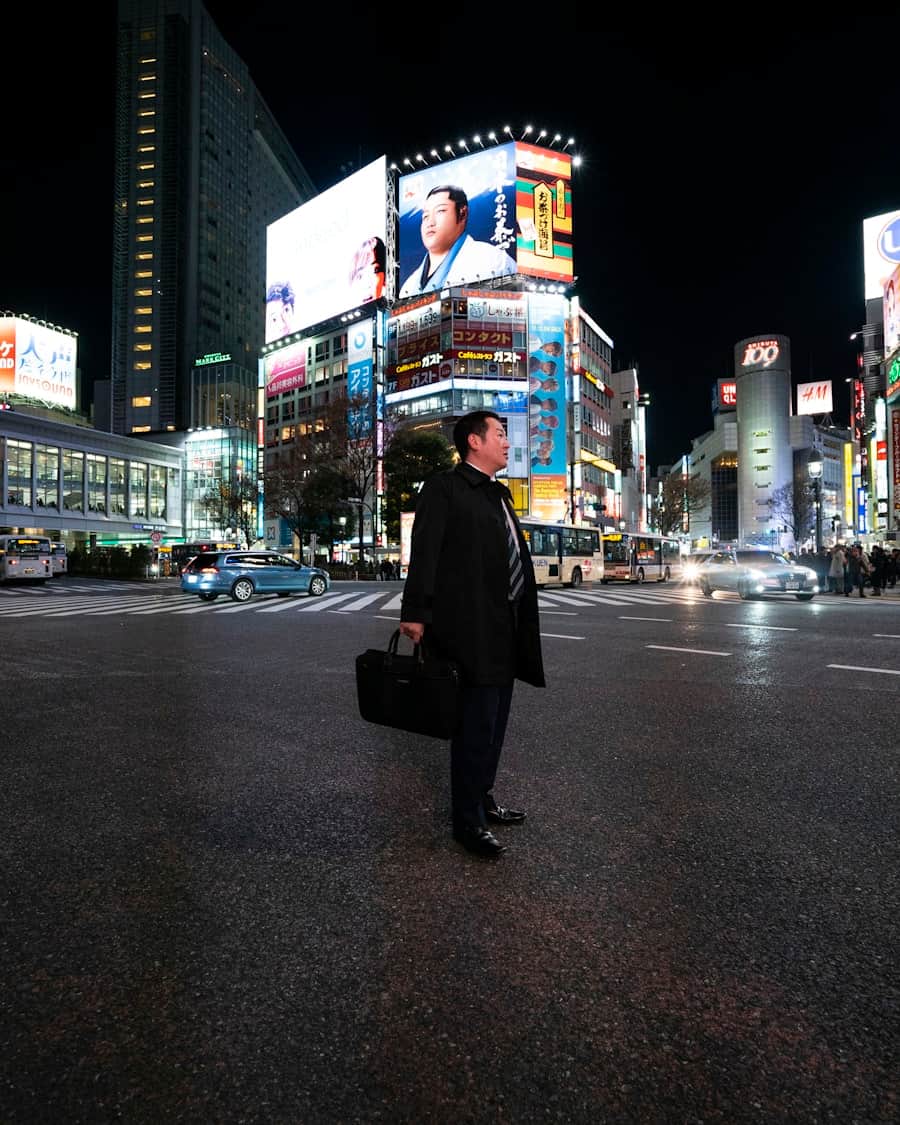
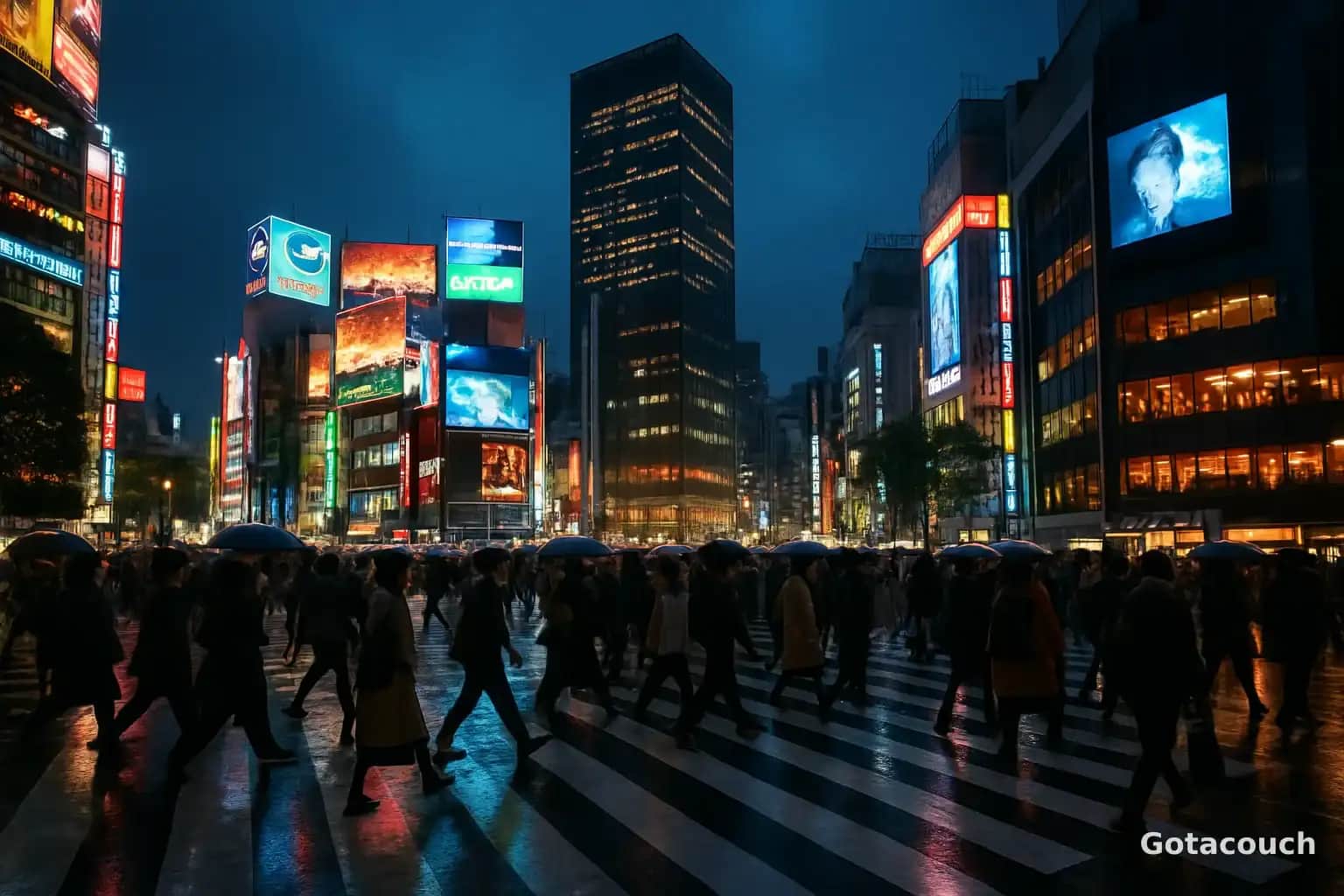
But the most photographed landmark might not be a building at all: it's Shibuya Crossing, where up to 500,000 pedestrians cross paths every day at peak hours, with waves of around 2,500 people crossing at each change of the light. A purely urban spectacle, best watched both from the street and from the cafés overlooking the scene.
Yokocho and Izakaya: Meeting Tokyoites
This might be exactly where the real secret to understanding Tokyo beyond the postcards lies: the yokocho, those narrow alleys lined with small izakaya marked by red lanterns. Here you discover a less polished, warmer Tokyo, where you share a drink at the counter with neighborhood regulars. Nonbei Yokocho, tucked right next to Shibuya station, is an iconic example: its yakitori restaurants and tiny bars, sometimes so small that four or five people fill them up, embody a neighborhood conviviality far removed from the futuristic image so often attached to the city.
This is exactly the spirit GOT A COUCH? stands for: choosing to stay with a local rather than in an anonymous hotel, so that a Tokyoite host can point you toward their favorite yokocho, their neighborhood shrine, or their go-to noodle shop — the kind of addresses that appear in no guidebook.
Food: Between Markets, Izakaya and Everyday Rituals
Tsukiji Market, for a long time the largest fish market in the world, moved to Toyosu in 2018, where visitors can now watch the tuna auction from dedicated viewing walkways. The old Tsukiji site hasn't disappeared, though: its outer market remains a street food hotspot, between fresh sushi stalls and matcha tea vendors. Beyond the markets, Tokyo's food culture is also lived out in the konbini on every street corner, the gourmet basements of department stores, and, of course, the neighborhood izakaya where a day of sightseeing often comes to a close.
Seasons and Traditions: Hanami, Momijigari and Sumo
Tokyo's calendar remains deeply marked by the seasons. In spring, it's hanami, the contemplation of cherry blossoms, that brings families and coworkers together under the trees in parks. In autumn, momijigari takes over: like hanami, it comes with seasonal dishes, temple illuminations and garden events. The ginkgo-lined avenues of Meiji Jingu Gaien are among the most popular spots to admire this golden spectacle.
Another very much living tradition: sumo. Three of the six annual tournaments take place in Tokyo, at the Ryogoku Kokugikan, each spanning fifteen days in January, May and September — a unique opportunity to witness a centuries-old ritual at the heart of a resolutely modern megacity.
Off the Beaten Path
Beyond the best-known neighborhoods, a few spots are worth the detour for anyone wanting to escape the crowds. Yanaka Ginza extends the working-class atmosphere of old Tokyo with its traditional shops. Kiyosumi Garden, in the east of the city, charms with its large central pond dotted with rocks and its typical little bridges. More unusual still, the Sugamo neighborhood, often nicknamed the "Harajuku for grandmothers," offers a glimpse into a working-class, intergenerational Tokyo. Finally, the rooftop terrace of the Seibu department store in Ikebukuro makes for an unexpected family outing, far from the bustling traffic, for a quiet outdoor picnic.
Around Tokyo: Easy Getaways
Several classic destinations let you extend the trip without starting from scratch: Kamakura for its temples and its great seaside Buddha, Nikko for its UNESCO-listed shrines nestled in nature, Hakone for its hot springs and views of Mount Fuji, Kawagoe, nicknamed "Little Edo" for its period architecture, or Yokohama for its Chinatown and port-town atmosphere. Each of these excursions can easily be done in a day from the capital.
When to Go
Spring, from late March to May, and autumn, from September to November, remain the most recommended times to visit Japan: cherry trees light up pink in spring, maples turn red in autumn, and temperatures avoid both the summer heat and the sharp cold of winter. If you do travel in winter, remember to layer your clothing: even when it's cold outside, Tokyo's trains and shops tend to be overheated.
How Long to Stay
To get a handle on even just the city's major neighborhoods, five days is generally the minimum recommended by experienced travelers — and that's still a short window given how many layers Tokyo has to explore. For those wishing to combine the capital with Kyoto and a few extra side trips, two weeks offer a more comfortable pace.
Practical Tips
- Get an IC card (Suica or Pasmo) as soon as you arrive to move freely by subway and train; a JR Pass can be useful depending on your national itinerary.
- The budget varies widely depending on travel style: guides suggest a broad range, from a tight budget of around 60 to 80 euros a day to a mid-range budget of 150 to 200 euros a day for decent business hotels and sit-down restaurants.
- Always keep a folding umbrella with you, even outside the rainy season.
- An eSIM or pocket wifi greatly ease the stay, since free street wifi remains rare.
- Since 2020, smoking has been restricted in many bars and restaurants: check before settling in on a terrace or at the counter.
Tokyo by the Numbers: What Really Matters
According to the Japan National Tourism Organization (JNTO), Japan as a whole welcomed a record 42.7 million international visitors in 2025, crossing the 40-million mark for the first time and surpassing the previous record of 36.9 million set in 2024 by more than 15.8%. These figures cover the country as a whole and shouldn't be confused with attendance specific to the capital.
The Tokyo Metropolitan Government, for its part, publishes an annual survey covering more than 700 tourist sites and several hundred events across the city, which shows that around 97% of recorded visits are of domestic origin. This type of count adds up visits across different sites rather than counting unique tourists, which explains why these local statistics don't compare directly with national figures on international arrivals — a useful nuance to keep in mind before drawing hasty conclusions about the city's relative popularity.
Beyond the statistics, it may be in the intimacy of a neighborhood izakaya, at a host's home that opens its door to you rather than a standardized hotel, that Tokyo best reveals its true face: that of a capital that has never stopped reinventing itself without denying its roots.
Articles to discover
Athens Neighborhood by Neighborhood: Marble Ruins, Cycladic Alleys and Rooftop Ouzo Beneath the Acropolis
September 21, 2026 at 12:20 PM
Auckland, City of Volcanoes and Sails: Where Māori Heritage Meets the Pacific Soul of New Zealand
September 19, 2026 at 8:06 PM
Amsterdam Beyond the Canals: Cycling Through Neighborhoods, Markets and the Dutch Art of Everyday Life
September 19, 2026 at 8:55 AM
Accra, the Ghanaian capital that carried Africa's independence: Jamestown, Osu and the Ga soul
September 5, 2026 at 12:58 AM
Seoul, a City of Two Faces: Royal Palaces, Futuristic Neon and Hallyu Culture Along the Han
September 2, 2026 at 8:05 AM
Fez, the Idrisid City Where You Learn to Slow Down: A Millennial Medina, Living Craftsmanship and Andalusian Flavors
September 1, 2026 at 8:04 PM
Comments
Log in to leave a comment.
No comments yet.